About Course
Course Overview
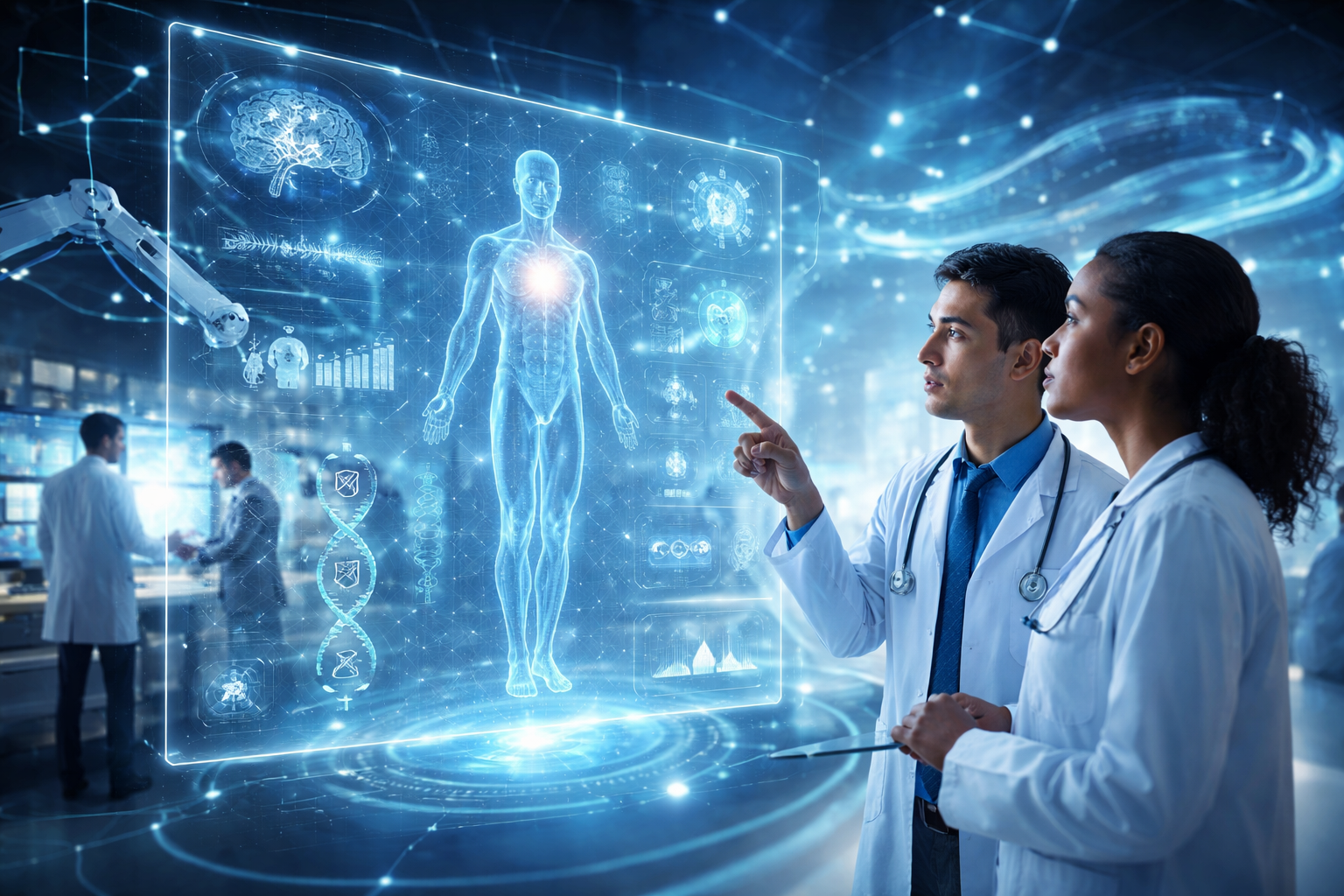
In this course, we explore the transformational potential of augmented intelligence (AI) in the practice of medicine and outline practical considerations for physicians who are using or considering using AI-based tools for clinical or administrative purposes. “Artificial intelligence” broadly refers to the ability of computers to perform tasks that are typically associated with a rational human being—a quality that enables an entity to function appropriately and with foresight in its environment.AI, machine learning and deep learning are distinct but related terms . Machine learning, a subtype of AI, describes systems that learn from data without being explicitly programmed. Deep learning, a subtype of machine learning, refers to systems that train themselves by processing data and information in a manner similar to the neural pathways of the human brain.AI tools can play a critical role in clinical delivery, they may similarly transform administrative functions.
Training needs
1.Lack of information about machine learning as atraining method that uses rewards and punishments to teach desired and undesired behaviors as part of model training. 2.Inability to integrate AI into the daily workflows of healthcare professionals in clinical settings. 3.Lack knowledge about the best application of translating AI in healthcare into practical Practice. 4.Gap in knowledge about evidence synthesis, effective dissemination and implementation, and evaluating the impact of AI in healthcare. 5. Gap knowledge of Machine Learning and Deep Learning Techniques and applications in healthcare. 6.Gap in using Artificial intelligence (AI) and the potential to revolutionize medical professional health education. 7.Lack of knowledge of Educational skills and training about Human-Machine Interaction and AI Education. 8.Insufficient Traditional Population health methods to address complex health issues and emerging infectious diseases. 9. Lack of understanding of how AI can improve patient-centered care.
Outcomes
Equip collaboration between Medical and Non-Medical Professionals about the knowledge, skills, and confidence to utilize Artificial Intelligence tools and technologies for data analysis, disease prediction, intervention design, and effective population health management: 1.Emphasizing AI as a tool to 𝘀𝘂𝗽𝗽𝗼𝗿𝘁, 𝗻𝗼𝘁 𝗿𝗲𝗽𝗹𝗮𝗰𝗲, 𝗵𝘂𝗺𝗮𝗻 𝗱𝗲𝗰𝗶𝘀𝗶𝗼𝗻-𝗺𝗮𝗸𝗶𝗻𝗴. 2. Explores the transformative potential of Augmented Intelligence (AI) in healthcare. 3. Identify optimized scheduling to minimize wait times and maximize alignment of patient needs and physician experience. 4. Monitor a clinical interaction with a model patient and provide feedback to the physician or trainee. 5.Analyze electronic health records at scale to identify potential human research subjects.Understand the fundamentals of artificial intelligence and its applications in medical education. 6. Enhance critical thinking and problem-solving skills in integrating AI into medical training.Discover how Generative AI (GenAI) can help you personalize care and save time by expanding your capabilities. 7.Learn The integration of artificial intelligence into medical professional health education can yield several positive outcomes in terms of training effectiveness and outcomes. 8.Safeguarding patient data and ensuring compliance with regulations like HIPAA are critical.
Course Content
Introduction to Artificial Intelligence in Clinical Practice
-
Introduction to Artificial Intelligence in Clinical Practice part 1
18:12 -
Introduction to Artificial Intelligence in Clinical Practice part 2
22:55 -
Introduction to Artificial Intelligence in Clinical Practice part 3
18:27 -
Quiz 1 – Introduction
AI Tools in medical care
AI-Driven Clinical Decision Support Systems
AI in Genomic Medicine and Precision Healthcare
AI-Assisted Electronic Health Records and Clinical Documentation
Post Quiz & Evaluation
Earn a certificate
Add this certificate to your resume to demonstrate your skills & increase your chances of getting noticed.

Student Ratings & Reviews

No Review Yet